guide
Safe Sleep Practices for Babies
PregnancyInfant (0-1)
TL;DR (Too Long; Didn't Read)
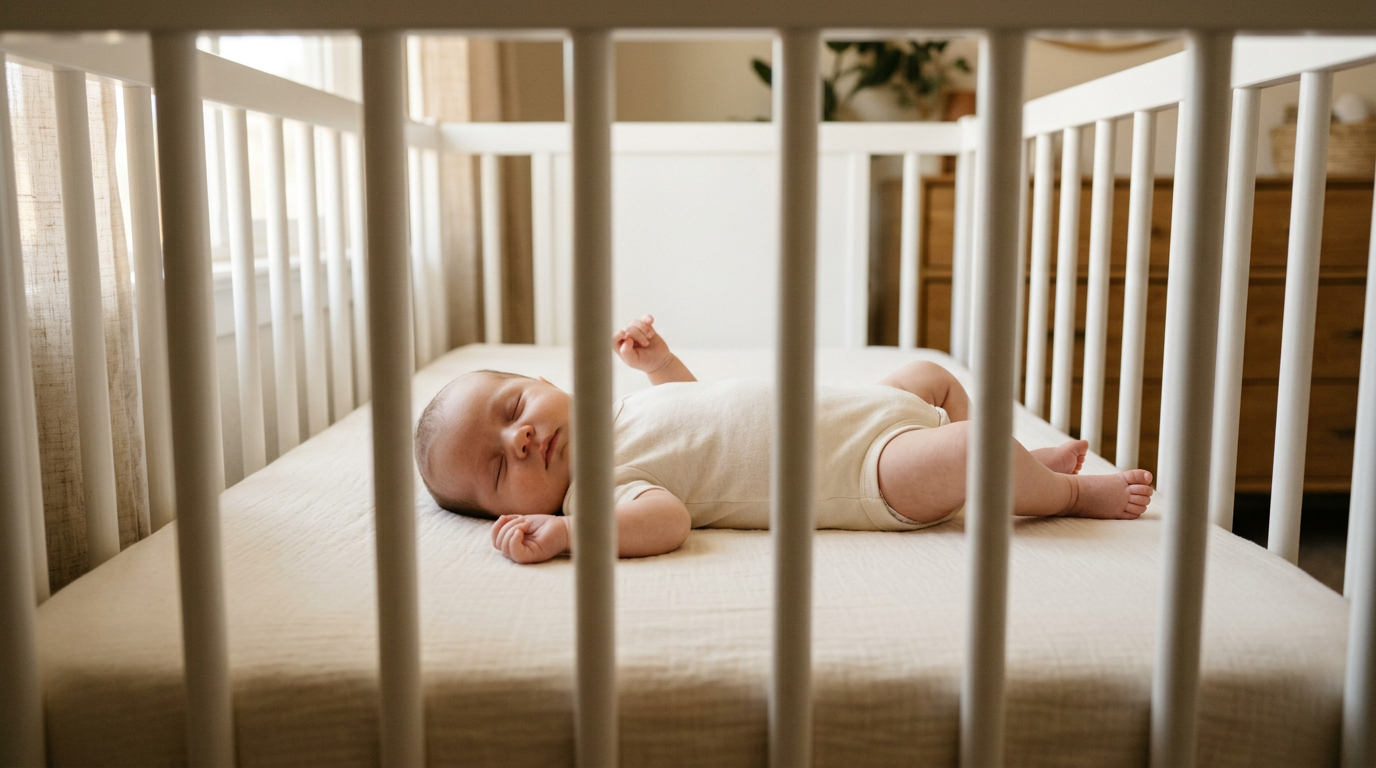
Safe sleep reduces SIDS risk: always place babies on their back, on a firm flat surface, in their own sleep space, with no loose bedding.
The ABCs of Safe Sleep
A - Alone: Baby sleeps in their own sleep space
B - Back: Always place baby on their back
C - Crib: Use a safety-approved crib or bassinet
Safe Sleep Environment
The Sleep Surface
- Firm, flat mattress
- Fitted sheet only
- No pillows, blankets, or bumpers
- No toys or soft objects
The Sleep Space
- Crib, bassinet, or play yard meeting safety standards
- No inclined sleepers or rockers
- No car seats or swings for routine sleep
Room Sharing
The AAP recommends room-sharing (not bed-sharing) for at least 6 months, ideally 12 months.
What to Avoid
Bed-Sharing Risks
Bed-sharing increases SIDS risk, especially if:
- Parent smokes or has been drinking
- Baby is under 4 months
- Soft bedding is present
- Parent is very tired
Other Hazards
- Soft surfaces (couches, armchairs)
- Overheating
- Covering baby's face or head
- Weighted sleep sacks or swaddles
Safe Sleep When You're Exhausted
- Ask for help with night feeds
- Nap when baby naps
- If you think you might fall asleep, remove hazards first
- Feed baby in your bed, then move to crib before sleeping
Swaddling Safely
- Stop swaddling when baby shows signs of rolling
- Use hip-healthy techniques
- Never swaddle in hot weather
- Place swaddled baby on their back only
📋Key Takeaways
- 1Always place baby on their back to sleep
- 2Use a firm, flat sleep surface
- 3Keep the sleep area clear of soft objects
- 4Room-share (not bed-share) for the first 6-12 months
❓ Frequently Asked Questions
About this article
Sj
Shrenuj jalan
Expert
Educationist | 15+ Years in K-12 Education & Child Development
Shrenuj Jalan is an educationist with over 15 years of experience in K-12 education and child development, helping parents and schools support children's learning and wellbeing.
K-12 Education
Child Development
School Readiness
+2
Published Feb 5, 2026
Updated Feb 5, 2026