Dealing with Picky Eaters: Evidence-Based Strategies
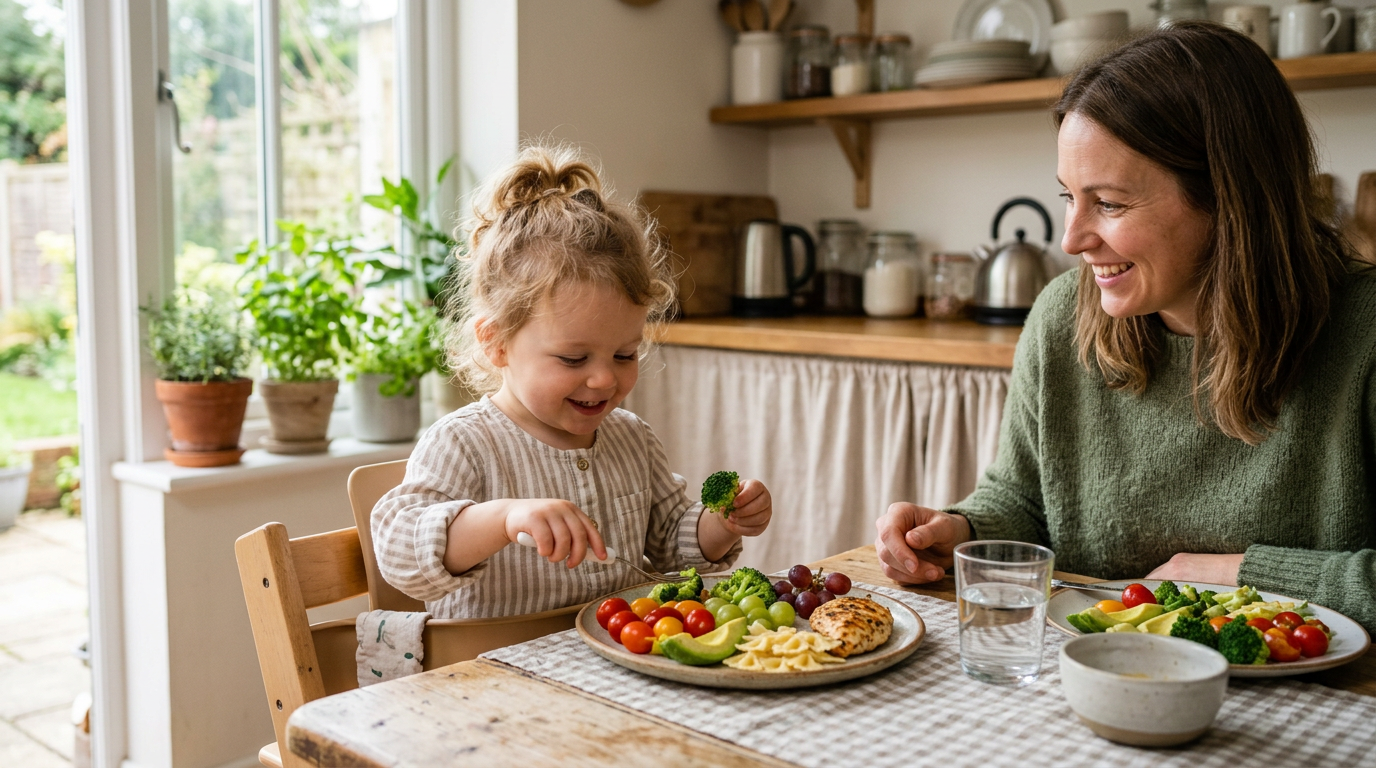
TL;DR (Too Long; Didn't Read)
Picky eating is developmentally normal in young children. Repeated exposure, no-pressure mealtimes, and family meals help expand food acceptance.
Understanding Picky Eating
Food neophobia (fear of new foods) is a normal developmental phase. It peaks around age 2-3 and typically improves by age 5-6.
Why Children Become Picky
- Biological: An evolutionary protective mechanism
- Developmental: Growing need for independence
- Sensory: Some children are more sensitive to textures and tastes
- Learning: Preferences are shaped by experience
The Division of Responsibility
Ellyn Satter's approach works:
- Parents decide: What food is served, when, and where
- Children decide: Whether to eat and how much
Evidence-Based Strategies
1. Repeated Exposure
Offer new foods 10-15 times without pressure. Simply having it on the plate counts as exposure.
2. Family Meals
Eating together models good eating and creates positive associations with food.
3. No Pressure
Avoid bribes, rewards, or forcing. Pressure increases resistance.
4. Make It Fun
- Let kids help prepare food
- Use fun shapes and presentations
- Try dips and sauces
5. Serve Familiar + New
Always include at least one food you know they'll eat alongside new foods.
What NOT to Do
- Force children to clean their plate
- Use dessert as a reward
- Make separate "kid meals"
- Give up after one or two rejections
- Label your child as "picky"
📋Key Takeaways
- 1Picky eating peaks between ages 2-6
- 2Children may need 10-15 exposures before accepting a new food
- 3Pressure to eat often backfires
- 4Model healthy eating yourself
❓ Frequently Asked Questions
Educationist | 15+ Years in K-12 Education & Child Development
Shrenuj Jalan is an educationist with over 15 years of experience in K-12 education and child development, helping parents and schools support children's learning and wellbeing.